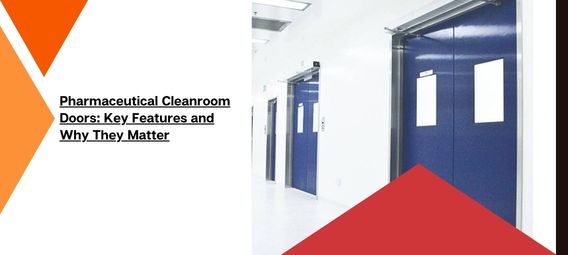
Pharmaceutical facilities depend on carefully controlled environments to ensure their products are safe and effective. In many cases, the cleanroom’s performance is only as good as its weakest point and that’s often the doors people use to go in and out. These doors need to do more than just open and close. They manage airflow and stop contaminants from reaching sterile spaces. In this line of work, it’s vital to keep conditions hygienic and to follow strict regulatory standards at all times. In many high-performance areas, standard doors are not enough, and that is where hermetically sealed doors become necessary for the facility to work correctly.
What Are Pharmaceutical Cleanroom Doors?
Pharmaceutical cleanroom doors are specially designed for laboratories and medicine manufacturing areas. They act as a barrier between rooms, limiting the spread of dust, germs, and other tiny particles. By doing this, they help maintain the clean, controlled conditions that are essential for producing safe and reliable medicines.
These doors use materials that don’t hold dirt and are easy to clean. Stainless steel is often used because it is strong and doesn’t rust easily. Powder-coated steel and High-Pressure Laminate (HPL) are also often used. Using these specific materials is a basic requirement for any facility that needs to stay GMP-certified. The doors must have a flat surface with as few joints as possible to prevent bacteria from growing in hidden gaps.
What Are Hermetically Sealed Doors?
A hermetically sealed door becomes airtight when closed. It uses a special track that lets the door move inward and downward as it shuts. This presses it tightly against the frame and floor to seal the room.
These doors play a key role in keeping the room’s pressure stable. In a cleanroom, the air pressure is carefully set either higher or lower than the surrounding areas to control how air moves. If a door isn’t sealed properly and starts to leak, the pressure can drop and the clean environment is put at risk. Hermetically sealed doors prevent this by closing tightly and stopping air from escaping or entering where it shouldn’t. You will find them used in the most crucial zones, such as sterile laboratories and operating rooms. In these places, a single airborne contaminant could cause a major failure in a process or experiment.
Key Features of Pharmaceutical Cleanroom Doors
When looking at pharmaceutical doors, many specific features make them work for a sterile environment. These are not optional extras but are necessary for the door to do its job.
- Airtight Sealing: This is the most important feature. The door must prevent any air exchange when closed. This makes sure that the HVAC system can maintain the correct air pressure inside the room.
- Hygienic & Easy-to-Clean Surfaces: The surface of these doors is kept completely smooth and non‑porous. Any kind of texture or wood grain is avoided, because tiny gaps can give bacteria places to hide. The materials are also chosen so they can handle frequent scrubbing and strong cleaning chemicals without getting damaged.
- Corrosion & Chemical Resistance: Because cleanrooms are disinfected often, the doors cannot rust or degrade. Stainless steel and high-quality coatings ensure the door lasts for years.
- Durability & Strength: In an industrial setting, doors are opened and closed hundreds of times a day. They need to be sturdy enough to handle this constant use without the hinges starting to sag or the seals wearing out too quickly.
- Vision Panels: Most of these doors have a window or vision panel. The glass is usually flush with the door surface. This leaves no ledges for dust to collect on.
- Automation & Sliding Mechanism: Many facilities choose sliding doors with sensors. This allows for hands-free operation. If a worker doesn’t have to touch a handle, there is less risk of cross-contamination.
Types of Pharmaceutical Doors
Different areas of a facility will require different types of doors. The choice depends on the level of cleanliness needed and the space available.
- Swing Cleanroom Doors: These are standard hinged doors. They are easy to install and work well for people entering and exiting. However, they need extra space to swing open, and the moving door can disturb the air in the room.
- Sliding Cleanroom Doors: These move along a track on the wall. They save a lot of space and are great for areas where trolleys or large equipment move through.
- Hermetically Sealed Doors: These are for the highest levels of air control. They are usually sliding doors that pull tight against the frame to create a 100% airtight seal.
- Double-Leaf Doors: These are used in wide openings. They are necessary when you need to move large machinery or big batches of product between rooms.
Why These Doors Matter in Pharmaceutical Environments
If you use the wrong door in a pharmaceutical plant, the effects can be expensive and dangerous. There are four main reasons why these doors are so important.
Contamination Control
The main goal of any cleanroom is to keep the product pure. Dust, microbes, and pollutants are everywhere in a normal building. Specially designed doors act as the final barrier. Without them, the risk of a batch being ruined by outside particles is very high.
Regulatory Compliance
The pharmaceutical industry is heavily regulated. Agencies like the FDA and local health authorities require facilities to follow GMP (Good Manufacturing Practice) and ISO standards. Part of these standards involves showing that your cleanroom can maintain its environment. If your doors are not up to spec, you will likely fail an audit.
Pressure Control
Cleanrooms rely on air pressure to keep dirty air out. If a door does not seal correctly, the air pressure will equalise with the outside hallway. This makes the expensive air filtration system useless. The door is what holds that pressure in place.
Improved Operational Efficiency
A door that works well helps the workflow. If doors are automated, staff can move quickly with their hands full. If the doors are durable, you don’t have to stop production for frequent repairs. It keeps the whole plant running without unnecessary interruptions.
Why Choose a Reliable Pharmaceutical Doors Manufacturer
Choosing a pharmaceutical door manufacturer affects your facility’s long‑term safety. You need a partner who understands sterile environment requirements and offers doors tested and certified for airtightness and fire safety.
Most cleanrooms are not standard sizes. In most projects, standard sizes don’t work for every space, so you often need custom-made doors that match different wall thicknesses or unusual room layouts. A good manufacturer will work with you on the design and make sure the doors are installed the right way. They’ll also offer after-sales support, which is important because the seals need to be checked regularly to confirm they’re still closing as they should. In the end, whether you’re using simple swing doors or high‑performance hermetically sealed doors, the quality of the manufacturing has a direct impact on how well your cleanroom performs.
Conclusion
Pharmaceutical cleanroom doors are an essential part of a safe manufacturing process. They protect the product, the staff, and the facility’s reputation by ensuring that contamination is kept at bay. From the basic swing door to the advanced performance of hermetically sealed doors, each type has a specific role in maintaining the integrity of the cleanroom.
If you are building a new facility or upgrading an existing one, choose high‑quality doors that meet all required standards. The right entry systems will help you avoid contamination problems and compliance issues later. Contact MP Swastik Doors to get a quote for your project.