In buildings with large numbers of occupants, emergency exit doors are essential for ensuring swift and safe evacuations during a crisis. However, these doorways must also withstand the heavy wear of daily, high-volume traffic without failing. Metal emergency exit doors are specifically engineered to provide this reliable, fail-safe access. By prioritizing high durability, uncompromised safety standards and frequent-use performance, these specialized doors guarantee that critical escape routes remain secure and fully operational when people need them most.
What Are Metal Emergency Exit Doors?
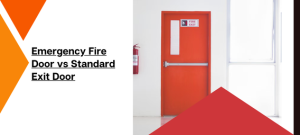
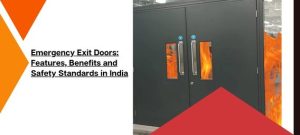
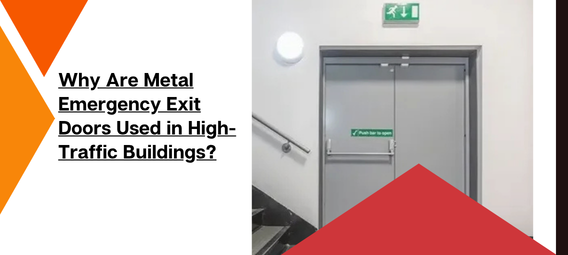
Metal emergency exit doors are exit leaves built from galvanised steel, CRCA steel, or stainless steel, reinforced to survive frequent opening under load. Most use double-skin construction with an infill core, hung on heavy-duty hinges and fitted with panic bar hardware. Configurations range from single-leaf to double-leaf, chosen by corridor width and occupant flow. The steel skin resists dents from trolleys and rushed foot traffic.
Why Are Metal Emergency Exit Doors Suitable for High-Traffic Buildings?
Five factors decide whether an exit door holds up under daily high-traffic use: durability, operation, fire performance, service life and maintenance.
High Durability and Impact Resistance
Steel exit doors resist denting and misalignment under impact that would crack timber or aluminium doors. Busy stairwells and mall exits see hundreds of open-close cycles daily and a reinforced leaf still closes flush after months of that use.
Reliable Emergency Operation
During an evacuation, a door has to open on the first push, every time. A horizontal exit device at the correct height lets anyone exit without fumbling for a handle and self-closing mechanisms shut the door after each use to keep fire compartments intact. Worn hinges add delay that compounds across a crowded exit.
Fire and Smoke Protection
Metal itself does not burn, but a fire-rated assembly needs more than a steel leaf to hold back fire and smoke. Fire-resistant cores, intumescent seals and matched frames turn a metal door into a tested assembly, rated for 30, 60, or 120 minutes. Hardware needs a matching rating too, since a mismatched closer can void the rating.
Long-Term Performance
Steel exit doors outlast lighter-duty entrance doors, since the base material resists wear from constant hinge and latch cycling. A powder-coated or galvanised finish protects against corrosion, particularly in coastal cities or humid indoor areas. Left unmaintained, galvanised steel rusts at weld points over a service life that can run past ten years.
Easy Maintenance
A steel surface wipes clean and shows damage clearly, speeding up routine inspection. Facility teams should check hinges, closers, latches, seals and panic hardware on a fixed schedule, not only after a complaint. Monthly checks catch a slow closer before it becomes an evacuation-day failure.
Where Are Metal Emergency Exit Doors Commonly Used?
Shopping centres, hospitals, schools, offices, factories, warehouses and hotels all rely on metal exit doors along their evacuation routes. Occupant load drives the specification: a mall with thousands of daily visitors needs wider, higher-cycle doors than a small office. Hospitals need doors wide enough for stretchers, which affects leaf width and swing direction. Factories and warehouses add dust, forklifts and heavier impact risk near the exit.
Key Features to Consider Before Choosing a Metal Emergency Exit Door
- Material: CRCA, galvanised, or stainless steel
- Fire-resistance rating, where required
- Door width sized for occupant load
- Panic hardware: push bar or touch bar
- Self-closing and latching mechanism
- Frame and seal compatibility for fire-rated doors
- Corrosion-resistant finish for humid or coastal sites
- Compliance with fire and building-safety codes
Metal Emergency Exit Doors vs Standard Exit Doors
Metal exit doors handle more daily cycles than timber or PVC before hinges or frames show wear. A steel leaf also accepts heavier panic hardware and fire-rated components without weakening. Steel alone, though, does not guarantee fire resistance. A plain steel door without a tested core and matched hardware offers no more protection than a well-built timber door; the rating comes from the complete assembly.
Maintenance Tips for High-Traffic Emergency Exit Doors
- Inspect the door and frame for dents or misalignment
- Test panic hardware and closers monthly
- Confirm the door closes and latches on every cycle
- Check fire-rated seals for damage or paint buildup
- Keep the exit route and doorway clear at all times
Conclusion
Metal emergency exit doors suit high-traffic buildings because they hold up to constant use, not because steel is inherently safer than other materials. The right choice depends on occupant load, fire rating and hardware needs, specified as one complete assembly. For a metal fire door assembly matched to your building’s requirements, contact MP Swastik Doors.