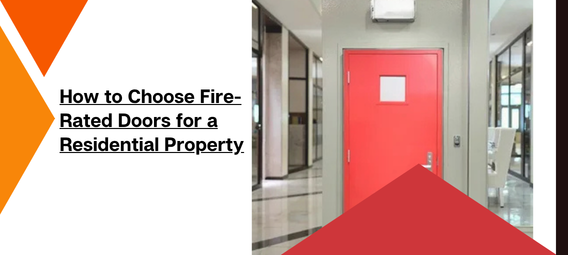
Fire-rated doors serve as a critical barrier during a safety emergency. It includes heat, flames, and toxic smoke, ensuring a safe escape route for your family. Homes need doors that balance essential safety standards with modern design and quiet comfort, unlike commercial spaces that prioritize high-traffic durability and complex evacuation systems. Selecting the right door involves reviewing core strength standards, structural durability, accurate fitting requirements, and visual compatibility with the home’s architecture.
What Are Residential Fire-Rated Doors?
A residential fire-rated door is an assembly tested and certified to resist fire for a specified period, commonly 30 or 60 minutes in homes and apartments. The rating covers the leaf, frame, seals, and hardware tested together, containing flames within the area of origin and giving residents extra minutes to exit.
Pairing a certified leaf with an unused frame breaks that performance. For residential fire-rated doors, the frame, seals and hardware must carry matching certification.
Also read: All About Fire Resistant Doors
Where Are Fire-Rated Doors Used in Residential Properties?
Stairwells carry the highest priority, since they often serve as the only escape route. Garages, utility rooms and kitchens follow, based on fire-risk sources such as stored fuel and electrical panels.
Placement follows the property’s layout: a single-storey house might require a single door at the garage, while apartment buildings need doors on protected staircases, between units and at lift lobbies.
Key Factors for Choosing Residential Fire-Rated Doors
Five factors decide how well a fire-rated door performs once installed.
Required Fire-Resistance Rating
A fire rating defines the duration that a tested assembly resists fire, expressed in minutes: commonly 30, 60, 90, or 120, depending on location and the applicable regulation. A staircase door in a four-storey block needs a higher rating than a utility door in a house. Match the rating to the opening; over-specifying adds cost and under-specifying fails compliance.
Door Material and Construction
Most residential fire-rated doors use a galvanized steel shell around a core such as mineral wool or vermiculite board. Steel resists warping better than timber under sustained heat, holding its shape to maintain the seal. A denser core improves fire resistance but adds load on latches, so hardware must match the door’s weight.
Frame, Seals, and Hardware
The frame must carry the same rating as the leaf; an unrated frame breaks the tested assembly. Intumescent seals expand under heat to close the door-frame gap, while smoke seals limit cold smoke before that heat builds. Hinges, closers and latching hardware also need matching certification; standard hardware rejects the unit.
Ease of Operation
A fire-rated door must close and latch fully every time, because self-closing hinges or closers handle this without relying on residents. Exit hardware on escape routes should open quickly from inside without keys while staying secure from outside.
Size, Configuration, and Installation Location
Dimensions depend on the opening and its function. Stairwell doors often use single-leaf configurations for simpler sealing, while wider openings such as garage entrances may require double-leaf doors with a rated seal at the meeting point. Confirm wall thickness and opening size before ordering.
Read more: Fire Resistant Door Installation Guide
Fire-Rated Door vs Standard Residential Door
A standard residential door serves privacy, security and appearance; it has not been tested for fire resistance and its wood frame offers little resistance to sustained heat. A fire-rated assembly passes a standardized fire test with a leaf, frame, seals and hardware certified together, confirmed by a certification number.
Painting a standard door to resemble a fire door does not create fire resistance. Request the certification document and confirm it matches the exact product being installed.
Common Mistakes to Avoid When Selecting Fire-Rated Doors
Homeowners choosing fire-rated doors commonly make five mistakes.
- Choosing a door on appearance or price alone, ignoring the certified rating.
- Ignoring the fire rating required for the opening.
- Combining a rated leaf with an unrated frame or hardware.
- Overlooking smoke protection, since a door can resist flame yet still leak smoke.
- Skipping installation and maintenance, including gap tolerances and seal checks.
Conclusion
Choosing a residential fire-rated door requires five checks: the correct rating, tested construction, a suitable frame with thermal and smoke seals, matching hardware and correct installation.
MP Swastik Doors manufactures metal fire doors for homes, apartments and high-rise residential buildings, certified to the ratings required under applicable regulations. Contact MP Swastik Doors for a door recommendation suited to your property.