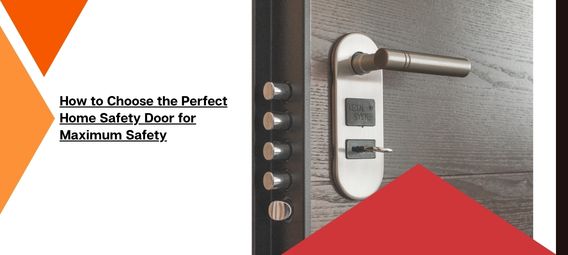
Home security has moved well past alarm systems and CCTV. The front door is still the single most targeted entry point in residential break-ins, and yet most homeowners spend less time selecting it than they do choosing kitchen tiles. A quality home safety door functions as a physical barrier that slows, and in most cases completely stops, unauthorized access. That shift in thinking has pushed safety doors for homes into mainstream demand, with steel safety doors in particular gaining ground for their structural reliability and long service life. Selecting the right door means evaluating material, locking mechanisms, fire resistance, and build quality together.
Why Is a Home Safety Door Important?
Forced entry rarely looks like what films depict. Most break-ins take under 90 seconds, and a structurally weak door gives an intruder exactly the time needed. A home safety door built from heavy-gauge steel resists kick-in attempts, crowbar leverage, and lock-drilling in ways hollow-core or timber doors cannot. Doors with 18-gauge or thicker steel panels and reinforced frames require specialised tools to breach, a risk most intruders avoid entirely. Quality home security doors also resist corrosion and impact damage across 20-plus years, lifting property value while delivering genuine, compounding peace of mind.
Types of Home Safety Doors
Choosing the right type starts with understanding what each configuration offers for your specific property layout and risk profile.
Steel Safety Doors
Steel safety doors use cold-rolled or galvanised steel panels, typically ranging from 16 to 20 gauge, and suit standard single residential openings requiring maximum impact and forced-entry resistance.
Stainless Steel Safety Doors
In coastal and high-humidity locations, stainless steel versions resist surface corrosion better than mild steel, which needs more upkeep, making stainless steel a great option for waterfront ground-floor apartments.
Single Door Safety Doors
Single-panel configurations work best for standard residential doorframes up to about 36 inches wide, offering full structural integrity without the alignment issues that can arise with wider openings.
Double Door Safety Doors
Double-panel doors accommodate wider entryways in independent homes or high-end apartments and allow larger furniture transit without compromising perimeter security when the secondary panel locks correctly.
Decorative Safety Doors
Decorative options layer powder-coated finishes, geometric cutwork or embossed panel designs over a reinforced steel core, letting homeowners achieve a specific aesthetic without trading away structural protection.
Customized Home Security Doors
Home Security Doors built to custom specifications address non-standard openings, unconventional swing directions or site-specific finishing requirements that off-the-shelf products cannot accommodate without costly modifications.
Key Features to Look for in a Home Safety Door
Not every door marketed as a safety door meets the same construction standard. Knowing which features to verify protects against underspending on a product that looks secure but performs poorly under load.
High-Quality Steel Construction
Doors built from 16-gauge or thicker cold-rolled steel panels hold their shape under direct impact, resist deformation at hinge points, and do not flex at the frame under lateral load.
Multi-Point Locking System
A multi-point lock engages the frame at three or more points simultaneously, distributing force across the full door height and eliminating the single-point failure that standard deadbolts allow.
Strong Hinges and Frames
Concealed or heavy-duty exposed hinges rated for doors above 80 kg prevent hinge-side attacks, which account for a significant share of forced-entry attempts on otherwise well-locked doors.
Corrosion and Rust Resistance
Galvanised or epoxy-primed steel with a powder-coated finish prevents surface rust in high-humidity conditions and maintains structural integrity over a 15-to-20-year service life with minimal intervention.
Fire-Resistant Properties
Fire-rated Steel Safety Doors with mineral-core infill and intumescent seals provide 30 to 120 minutes of flame and smoke containment, a critical feature in multi-storey residential buildings.
Advanced Locking Mechanisms
Anti-pick, anti-drill cylinder locks paired with reinforced strike plates stop the two most common lock-attack methods used in residential break-ins without requiring electronic systems.
Modern and Attractive Designs
Current steel door manufacturing delivers matte, gloss, wood-grain, and custom colour finishes that integrate cleanly with both contemporary and traditional home interiors, without compromising structural integrity.
How to Choose the Perfect Home Safety Door
Start with your property’s actual risk exposure. A ground-floor urban apartment demands a different specification than a standalone house on a quieter street. Material thickness and frame construction outweigh aesthetics every time; a 16-gauge welded steel frame outperforms a thinner decorative door regardless of showroom appeal. Check fire resistance ratings for primary exit routes and confirm corrosion treatment for coastal or high-rainfall regions. Evaluate the locking system separately. Multi-point locks, anti-drill cylinders, and reinforced strike plates address distinct attack vectors. Confirm warranty terms cover both door and hardware.
Benefits of Installing Home Security Doors
Home Security Doors deliver concrete advantages that extend well beyond basic entry protection. Here is what homeowners consistently report after installation.
- Steel safety doors with multi-point locking systems prevent most forced-entry attempts before an intruder reaches the lock cylinder.
- Structural steel construction withstands daily impact, frame stress, and hardware wear without degradation over a minimum 15-year service life.
- Galvanised and powder-coated finishes resist rust, UV fading, and moisture damage across full monsoon seasons and coastal humidity.
- Reinforced steel doors require no more than an annual hinge lubrication and surface wipe-down to maintain both appearance and function.
- Powder-coated finishes, embossed panels, and custom colour options let steel doors complement living room joinery, entrance lighting, and facade materials.
- Residents in properties with reinforced entry points consistently report lower day-to-day security anxiety, particularly in ground-floor and standalone home settings.
Common Mistakes to Avoid When Buying a Home Safety Door
Price is the most frequent deciding factor and consistently the wrong one. Doors priced below market rate for their stated gauge almost always cut corners on frame welding, hinge quality, or panel thickness. Lock quality deserves separate scrutiny; many doors ship with basic single-cylinder locks that attackers defeat in under 30 seconds. Verify anti-pick and anti-drill ratings independently. A thin or improperly anchored frame fails at the wall fixing regardless of lock quality. In multi-storey homes, skipping fire resistance ratings and warranty checks compounds the risk significantly.
Conclusion
A home safety door earns its value through material quality, lock engineering, and long-term structural performance working together. No single feature makes a door secure; the combination of thick steel construction, multi-point locking, fire resistance and proper frame anchorage determines real-world protection. Investing in quality Home security doors translates directly into reduced vulnerability, lower maintenance costs over time and measurable peace of mind. MP Swastik Doors manufactures steel safety doors across this full specification range, serving residential, commercial and institutional projects.