Most homeowners treat the front door as an aesthetic decision and realise the security gap only after a break-in attempt. Choosing between home safety doors and traditional entry doors carries real structural consequences, and the question of which door is better for home security comes down to more than just price. Rising urban crime figures and tighter building codes have pushed demand for steel safety doors and home security doors well past niche categories into everyday residential purchasing. This blog compares both door types across security, durability, design, and cost-effectiveness to help you make the right call.
What Are Home Safety Doors?
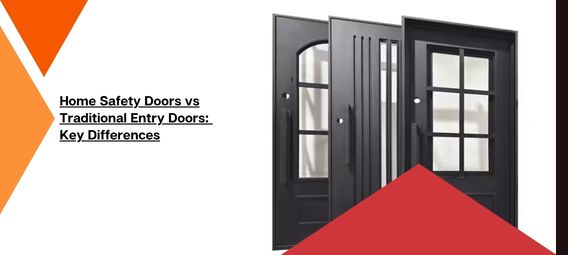
Home Safety Doors puts structural resistance ahead of everything else. Most use cold-rolled steel frames ranging from 1.2mm to 2mm in thickness, with additional reinforcement at the hinge points and lock zone, the two areas where door frames fail first under physical force. Multi-point locking systems engage bolts at three or more contact points along the frame simultaneously, so no single weak spot exists for a pry bar to exploit.
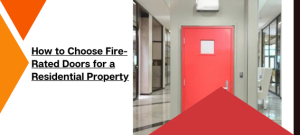
Fire resistance is another measurable advantage. Quality steel safety doors carry fire ratings between 30 and 90 minutes, depending on construction grade, which makes them appropriate for apartments, shared corridors, and ground-floor residential entries. Anti-drill plates over the lock cylinder and concealed hinges add tamper resistance that surface-level hardware upgrades on traditional doors cannot replicate.
What Are Traditional Entry Doors?
Solid wood, hollow-core wood, fiberglass composites, and aluminium-framed glass panels all fall under traditional entry doors. Solid hardwood holds up reasonably well against casual impact and remains a popular choice for independent homes and bungalows where architectural character matters as much as function.
The core security limitation lies in the locking mechanism. Standard mortise locks and basic deadbolts concentrate all resistance at a single point on the frame, which experienced intruders can bypass in under 60 seconds using a pry bar on the weakest section of the door jamb. Wood also absorbs moisture, swells in coastal and high-humidity climates, and stays vulnerable to termite damage year-round in tropical regions. Fiberglass alternatives reduce those maintenance concerns but lack the structural rigidity and fire rating of steel-core construction.
Home Safety Doors vs Traditional Entry Doors: A Closer Comparison
Before comparing both door types across individual factors, it helps to understand that the gap between them is not merely one of material preference. It reflects two fundamentally different design priorities, one built around entry experience and curb appeal, the other around resisting forced access and lasting through decades of real-world use.
Security Comparison: Which Door Offers Better Protection?
Steel safety doors distribute resistance across the full frame length rather than relying on a single bolt to hold the door shut. When a multi-point locking system engages, bolts anchor simultaneously at the top, centre, and bottom of the frame, leaving no single leverage point for forced entry. Steel at 1.5mm to 2mm thickness absorbs repeated kick-in attempts that crack hollow-core wood doors in a single strike. Anti-drill protection over the lock cylinder blocks the fastest bypass method used in residential break-ins. Traditional entry doors with single-point deadbolts carry all that load on one short bolt, and once the surrounding frame splinters, the door opens. For ground-floor apartments, urban properties, and homes without perimeter fencing, that structural gap makes home security doors the only practical choice.
Durability and Maintenance Comparison
Powder-coated steel doors resist rust, UV exposure, and surface degradation for 20 to 30 years under standard residential conditions. Maintenance over that period amounts to occasional cleaning and hinge lubrication every two to three years. Wood doors require repainting or re-staining every three to five years, and termite treatment adds recurring cost in tropical climates. Fibreglass fades and develops surface cracks within 10 to 15 years in high-sun environments. Across a 25-year ownership period, the maintenance cost of a traditional door often exceeds the original price difference between the two door types.
Design and Aesthetic Appeal
Modern home safety doors have evolved significantly and no longer feature the industrial appearance that discouraged early buyers. Manufacturers now offer powder-coat finishes in a wide colour range, embossed panel patterns, and decorative grille inserts that suit both contemporary and traditional facades. Some steel door ranges incorporate reinforced glass panels that preserve natural light without compromising the structural frame. Traditional entry doors retain an edge in raw visual variety, with carved wood, leaded glass, and heritage panel profiles that steel does not fully replicate. For most homeowners, though, choosing a steel door with a finish matched to the exterior resolves the aesthetic concern without giving up structural performance.
Which Door Is More Cost-Effective?
Steel safety doors carry a 20 to 40 % higher purchase price than comparable solid wood alternatives at the point of installation. That gap shrinks considerably over a 10-year window. Wood doors in coastal or high-humidity locations typically need full replacement within 12 to 15 years, while a correctly installed steel door runs 25 years or longer in the same environment. Hardware replacement, repainting cycles, and termite treatment compound the long-term cost of traditional doors in ways that the initial price comparison does not show. Factoring in replacement frequency and upkeep, home safety doors deliver a lower total ownership cost across most residential scenarios despite the higher upfront investment.
Who Should Choose Home Safety Doors?
Families with children or elderly members benefit most from the combination of fire resistance and forced-entry protection that steel safety doors carry. Ground-floor and first-floor apartment owners face statistically higher break-in risk in multi-unit buildings, and a reinforced steel entry point directly addresses that exposure. Independent homeowners in high-traffic urban neighbourhoods gain from the multi-point locking advantage even when a building society or gated perimeter adds a first layer of security. Properties in coastal zones and high-humidity regions get a functional advantage from steel over wood because moisture damage and termite attack, the two primary failure modes of traditional doors, do not apply. Homeowners who want a door that performs for two decades without recurring maintenance costs will also find that home security doors remove the upkeep burden entirely.
Conclusion
Home safety doors outperform traditional entry doors on forced-entry resistance, fire rating, and long-term ownership cost, while traditional doors hold a modest advantage in material variety and initial price. The right choice depends on the homeowner’s security exposure, climate conditions, and budget horizon. MP Swastik Doors manufactures fire rated and steel safety doors to meet the needs of those looking for steel construction with customizable finishes in both residential and commercial grades.